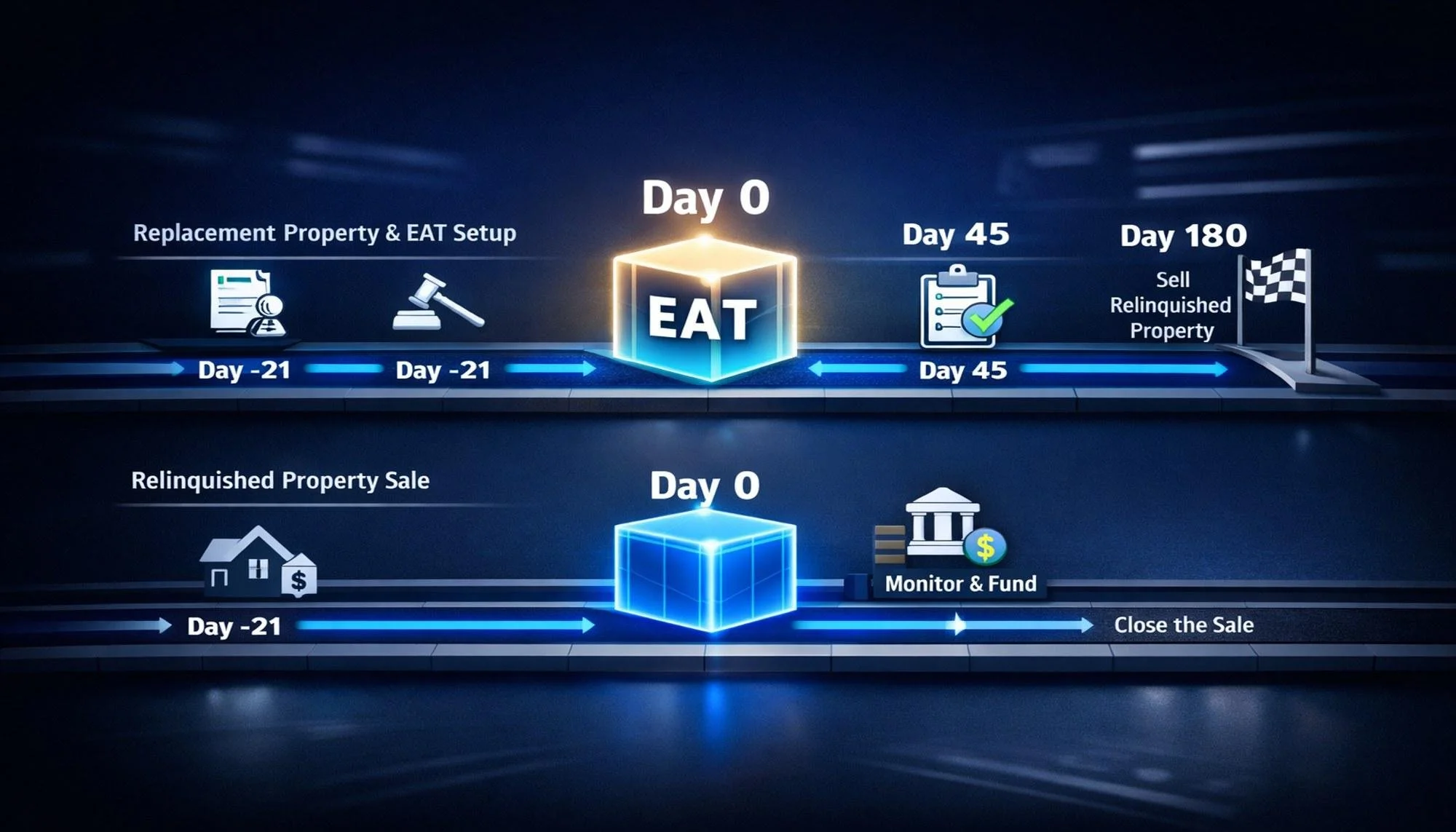
Of the two deadlines that govern every 1031 exchange, the 45-day identification period is the one that trips up the most investors — and it offers zero flexibility. From the day your relinquished property closes, you have exactly 45 calendar days (not business days) to formally identify replacement property in writing to your qualified intermediary. Miss it by even one day, and the entire exchange fails, triggering full capital gains tax on the sale.
Day 0 is your closing date on the relinquished property — the day title transfers and your qualified intermediary receives the exchange proceeds. The 45-day count begins immediately, including weekends and holidays. There is no extension available for financing delays, due diligence issues, or a deal falling through, which is why developers in particular need a plan for identification before they've even closed on the property being sold.
The IRS gives you three ways to identify replacement property, and understanding which rule applies to your situation is critical: the Three-Property Rule (identify up to three properties of any value), the 200% Rule (identify any number of properties as long as their combined fair market value doesn't exceed 200% of the relinquished property's sale price), or the 95% Rule (identify any number of properties of any value, but you must actually acquire at least 95% of the total value identified).
A practical Day 0 to Day 45 checklist: Day 0-5, confirm your qualified intermediary has received and is holding exchange proceeds; Day 5-20, actively tour and underwrite candidate replacement properties, keeping detailed records of addresses and legal descriptions; Day 20-35, narrow to your final list under whichever identification rule fits your strategy, and begin drafting the written identification notice; Day 35-42, submit signed identification documentation to your QI in writing, with unambiguous legal descriptions of each property; Day 42-45, confirm receipt and retain proof of timely delivery — fax, email, or hand delivery with a timestamp.
Developers managing land assemblages or multiple potential sites face an added challenge: identification must specifically describe the property, meaning a general area or a property still being negotiated typically won't satisfy IRS requirements. If your target property isn't under a signed contract yet, work with your QI on how to describe it precisely enough to meet the identification standard without overcommitting.
Because there's no partial credit for missing this deadline, Securitas 1031 tracks every client's Day 45 date from the moment their sale closes, sending reminders and reviewing identification language before it's submitted — so a technical misstep never costs you your exchange.
Have Questions About Your Exchange?
Talk to a 1031 expert with no obligation to move forward.
Start My Exchange