A standard, forward 1031 exchange follows an intuitive order: sell your property, then identify and buy a replacement within a fixed window. A reverse exchange flips that order entirely — you close on the new property first, and sell your existing one afterward. That flexibility solves a real problem, but it introduces a timeline that must be managed with precision from day one.
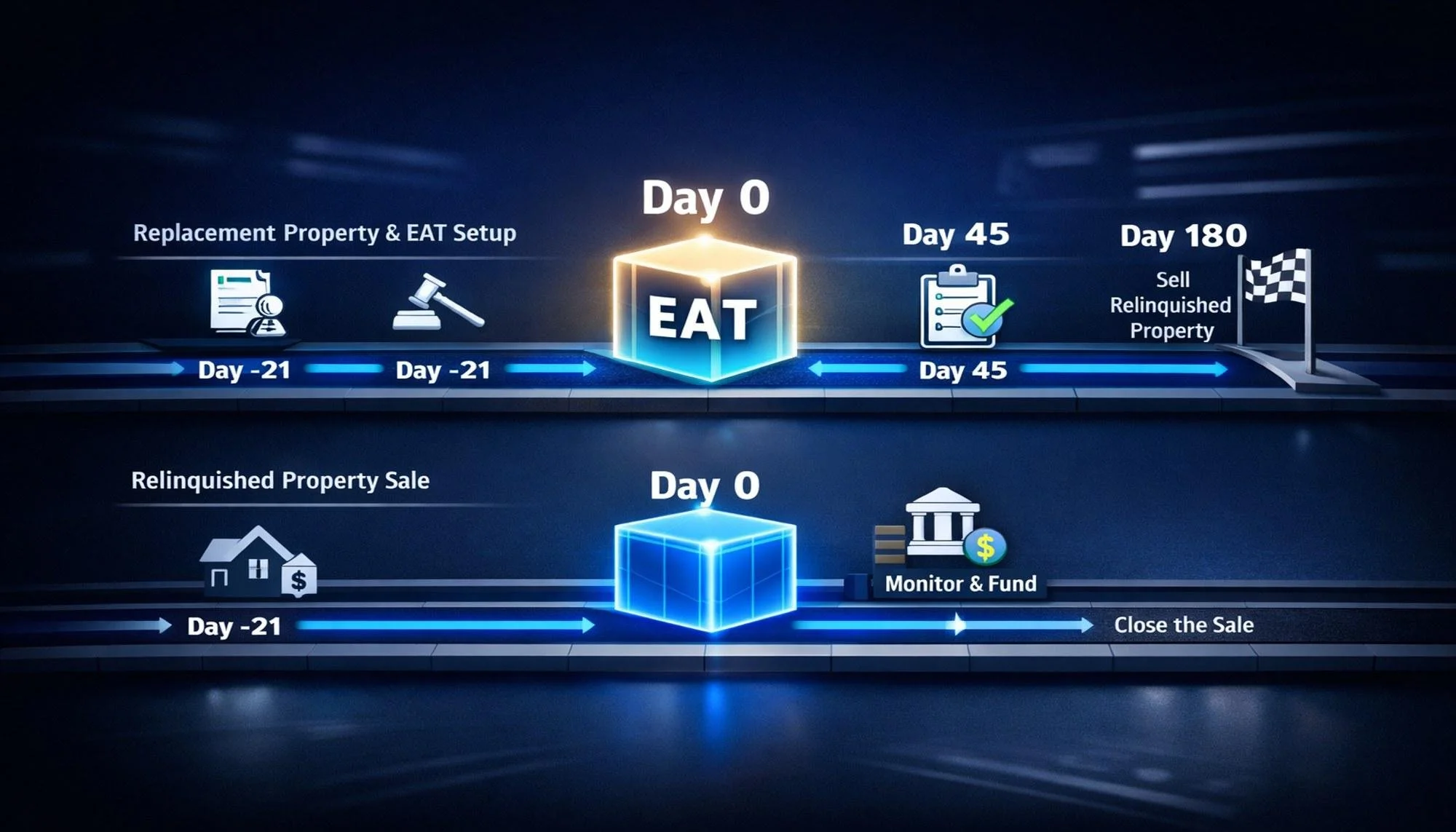
The reverse exchange clock starts the moment your Exchange Accommodation Titleholder (EAT) takes title to either the replacement property (most common) or the relinquished property. From that date, you have exactly 45 days to formally identify which property (or properties) will ultimately be treated as the relinquished property in the exchange, and 180 days total to complete the sale of the relinquished property and unwind the EAT structure. Neither deadline can be extended, regardless of financing delays, buyer financing falling through, or market conditions.
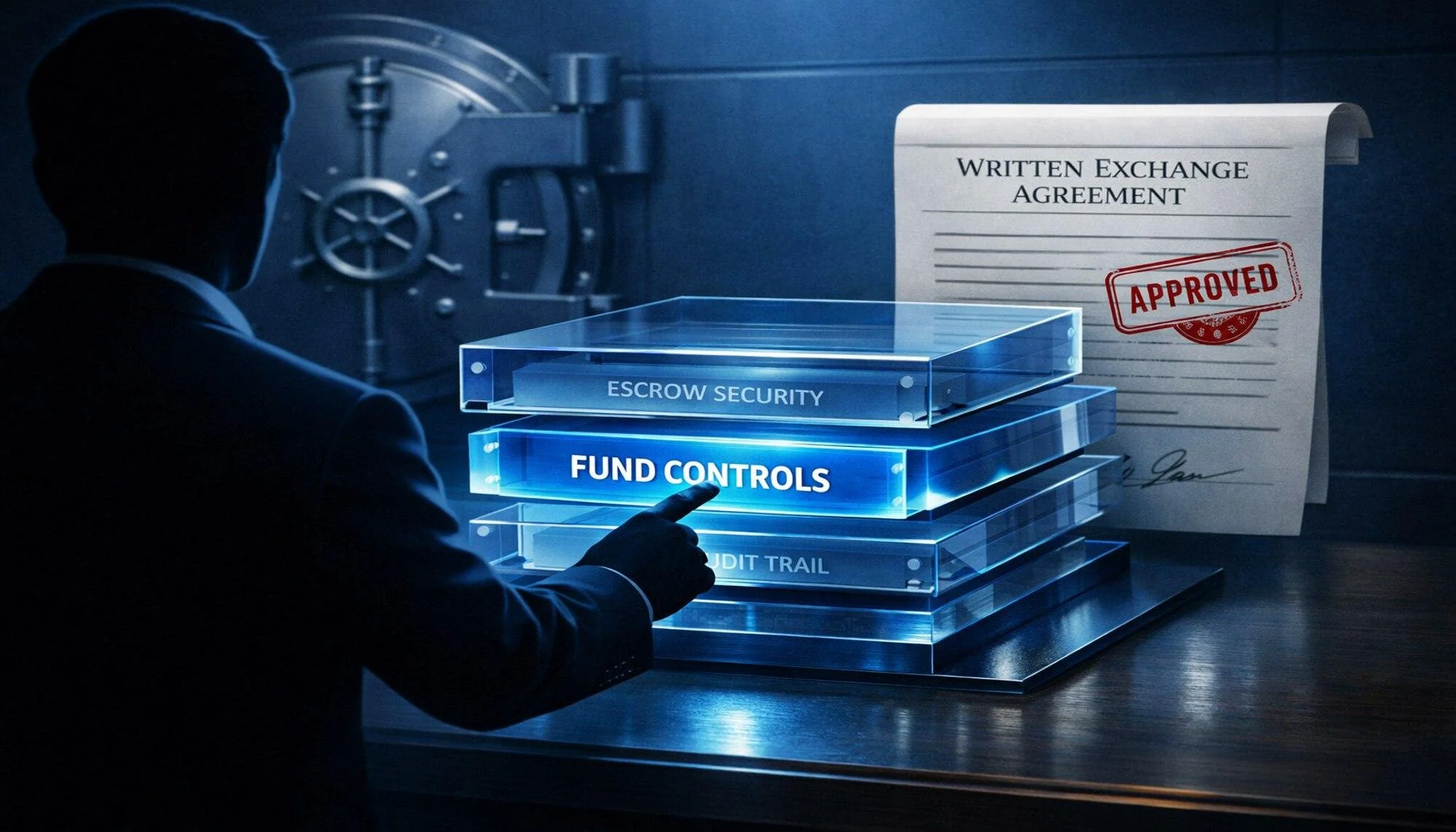
In practice, this means the reverse exchange timeline needs to be mapped out before you ever sign a purchase contract on the replacement property. Your qualified intermediary should have the EAT entity and Qualified Exchange Accommodation Arrangement (QEAA) documentation ready to execute concurrently with your closing — not scrambled together afterward. Lenders financing the replacement property also need advance notice, since the loan will technically be underwritten with the EAT as an interim titleholder in most structures.
Day 1 through Day 45 is the highest-risk window. You must market and sell your relinquished property (if it isn't already under contract) while simultaneously finalizing identification paperwork. Many investors entering a reverse exchange already have a buyer lined up for the relinquished property — but if you don't, this compressed timeline is often the deciding factor in whether a reverse structure makes sense for your deal.
Between Day 45 and Day 180, the priority shifts to closing the sale of the relinquished property and transferring the replacement property out of the EAT and into your name, completing the exchange. Title work, payoff of any existing loans, and final HUD-1 reconciliation all need to happen inside this window with no slack for delay.
Because reverse exchanges compress and reorder the usual sequence of a 1031, they demand a qualified intermediary who can run two closings, two sets of legal documents, and one unforgiving calendar at the same time. Securitas 1031 builds out the full day-by-day timeline before your first closing, so every deadline is tracked and nothing is left to chance.
Have Questions About Your Exchange?
Talk to a 1031 expert with no obligation to move forward.
Start My Exchange